If you’ve ever worked in a Network Operations Center (NOC), you know the “swivel chair” fatigue. It’s that wearying dance of jumping between five different vendor dashboards, trying to translate a spike in one chart into a drop in another, all while the clock is ticking on a critical outage. For years, we’ve treated network engineers like digital archaeologists—forcing them to dig through layers of raw telemetry just to find a single “why.”
As we navigate the complexities of 2026, the sheer volume of data from edge nodes, cloud environments, and IoT devices has made the traditional dashboard look more like a “Tower of Babel” than a helpful tool. The industry is reaching a breaking point where we have too much data and not enough time to think.
This is where the conversation is shifting. It’s no longer about how much data we can collect, but how easily we can talk to it. Vivek Rajagopalan, Founder & CTO of Unleash Networks, is at the forefront of this shift with the launch of the Trisul AI Assistant.
Breaking the Language Barrier: Bridging the “Dashboard Gap”
Modern networking is multi-vendor by nature. Each piece of hardware speaks its own dialect of metrics. For an engineer, this means spending more time being an interpreter than a problem-solver.

Founder & CTO – Unleash Networks
The Human Reality: When a network goes slow, the business doesn’t care about “ASNs” or “Flow records”; they care about why the payroll app is lagging. The “Dashboard Gap” is the mental tax engineers pay to translate technical jargon into business reality. By introducing a natural language interface, the goal is to let engineers ask questions in plain English—the same way you’d ask a colleague for a status update.
From “Querying” to “Conversing”
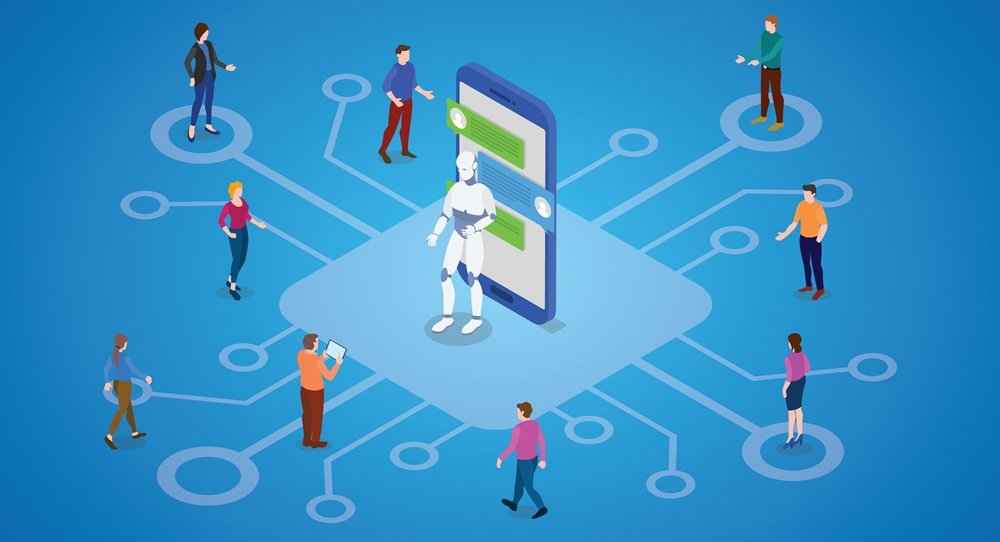
The Trisul AI Assistant represents a fundamental change in how we interact with infrastructure. Instead of writing complex scripts or navigating deep menus, you simply ask:
- “Which applications are eating up the most bandwidth in the last hour?”
- “Show me why inbound traffic from Europe spiked this morning.”
The Educational Shift: This isn’t just a “chatbot.” It’s an Intent Mapping system. It understands that when you ask about “inbound traffic,” you need to see specific underlying counters and flow data.
- Dynamic Visuals: The system doesn’t just give you a text answer; it chooses the best way to show you—whether that’s a bar graph for comparisons or a pie chart for distribution.
- Contextual Summaries: More importantly, it provides a “narrative.” It explains what you are looking at, which helps junior engineers learn faster and senior engineers move more confidently.
Toward “Predictive Autonomics”: The 2026 Horizon
We are moving out of the era of Reactive Monitoring (finding out what broke) and into the era of Predictive Autonomics. As Vivek Rajagopalan points out, the future isn’t just about asking what happened; it’s about the network telling you what will happen.
- Self-Healing Foundations: By integrating AI with edge computing, networks are becoming “aware.” They can detect a pattern that usually leads to a failure and alert the team before the first user even notices a glitch.
- Zero-Latency Insights: For global ISPs handling massive traffic, every millisecond counts. Moving the AI “brain” closer to the data (the edge) ensures that forensics happens in real-time, not after a two-hour data ingestion lag.
A Human-Centric Vision for a Global Standard
Based in Chennai and expanding into North America and EMEA, Unleash Networks is championing a “Human-First” philosophy. The goal is to ensure that as our digital world grows more complex, the tools we use to manage it actually become simpler.
By scaling R&D to support high-volume NetFlow ingestion coupled with AI, the focus remains on the individual professional. Whether you are a veteran architect or a fresh recruit, the technology should empower you to make decisions with “forensic” certainty without feeling buried under a mountain of data silos.
The Bottom Line
The network is the central nervous system of modern society. We shouldn’t be fighting with it just to understand its health. By turning network analytics into a conversational partner, we are finally moving away from “managing boxes” and toward “orchestrating intelligence.”