If you’ve ever stepped onto a major construction site or a heavy manufacturing floor, you know the feeling: it’s a controlled form of chaos. There is a specific kind of stress that comes with managing a project worth hundreds of crores. It’s the late-night realization that the electrical conduits on page 50 of the blueprints might clash with the HVAC system on page 110. It’s the sinking feeling when a project falls behind schedule and the “blame game” begins between the architects, the engineers, and the contractors.
In the EPC (Engineering, Procurement, and Construction) and manufacturing worlds, we’ve spent decades trying to solve these very human problems with static paper and rigid spreadsheets. But as we move through 2026, we are finally seeing a shift. It’s not just about “digital transformation”; it’s about giving people back their peace of mind.
Ramasamy Balasubramanian, Managing Director of Krion Consulting, has spent years looking at these gaps. His perspective isn’t just about software—it’s about how “Decision Intelligence” can change the daily lives of the people building our world.
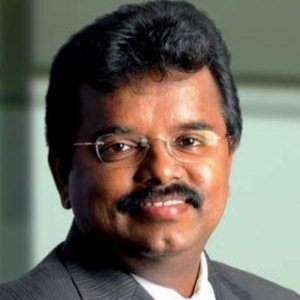
Managing Director – Krion Consulting
From “Static Files” to a “Living Blueprint”
For a long time, the industry treated digital models like a trophy—something beautiful to look at during a presentation, but useless once the actual building started. These were “passive twins.” If a pipe were moved in the physical world, the digital model would become a lie.
The transition to platforms like Krion 6D is about making that twin “breathe.” Imagine a project manager who no longer has to hunt through five different software programs to see if a change in the budget will delay the arrival of raw materials. By linking BIM (Building Information Modeling), costs, and schedules into one traceable system, the technology stops being a “task” and starts being a “truth.”
When Balasubramanian mentions a 15% reduction in cost overruns, he’s talking about more than just a line item on a budget. He’s talking about the 15% of errors that used to result in wasted materials, re-work, and the frustration of a team having to do the same job twice.
The “Invisible Mentor”: AI as a Safety Net
There is a common fear that AI, like the Krion6i engine, is here to replace the seasoned engineer. But the more human reality is that AI is here to act as an invisible mentor.
Think of it this way: An AI doesn’t “know” how to build a bridge better than a human does. What it can do is analyze millions of data points across a project and “tap the engineer on the shoulder” to say, “Hey, based on the last three weeks of progress, you’re likely to hit a bottleneck in the supply chain next Tuesday. You might want to pivot now.” It shifts the team’s energy from reactive (fixing fires) to proactive (preventing them). It’s about moving from a culture of “Who messed up?” to “How do we stay ahead?”
Industry 5.0: Putting the “Person” Back in the Factory
We often talk about Industry 4.0 as the era of robots. Industry 5.0, however, is the era of human-robot collaboration.
This is where technologies like AR (Augmented Reality) and VR (Virtual Reality) become incredibly grounded.
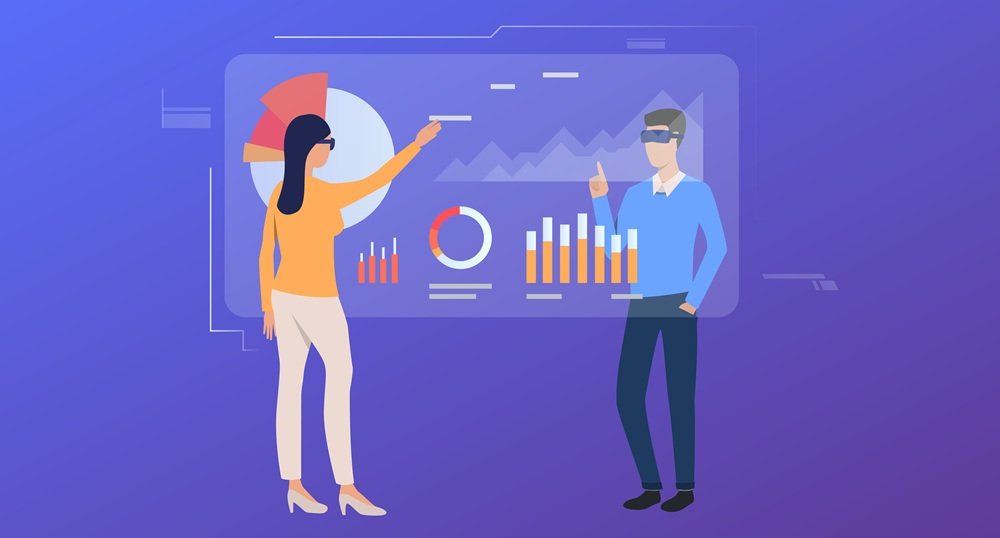
- For the Inspector: Instead of carrying a tablet and a measuring tape, an inspector can wear a headset and see the “future” of the building overlaid on the “present” of the site. They can see a deviation in a structural beam instantly, preventing a catastrophe before the concrete is even poured.
- For the Worker: It’s about safety. IoT sensors can feed real-time data into a digital twin, alerting a supervisor if a piece of machinery is vibrating in a way that suggests it might fail, potentially preventing an injury on the floor.
A Global Language for Local Talent
One of the most human challenges in global expansion—whether in Singapore, the USA, or India—is communication. Every region has its own way of working.
By adopting global standards like ISO 19650, companies are essentially creating a “Universal Language” for construction. It allows a specialist in India to collaborate seamlessly with a site manager in Singapore. This “hybrid model” isn’t just a business strategy; it’s a way of democratizing expertise. It allows the world-class AI talent emerging from India to support the massive infrastructure pushes happening in the West, ensuring that quality remains high regardless of where the project is located.
Security as a Form of Respect
Finally, there is the issue of trust. When you are building a defense facility, a power plant, or a government hub, that data is more than just “information”—it is a matter of national and personal security.
The move toward on-premise digital twins is a response to a very human need for sovereignty and protection. It’s an acknowledgment that while we want the benefits of the cloud and AI, we also need to know that our most sensitive blueprints are locked in a digital vault that we control.
The Big Picture
At the end of the day, a bridge isn’t just steel and concrete; it’s a way for people to get home to their families. A factory isn’t just a building; it’s a source of pride and livelihood for thousands.The work being done by firms like Krion Consulting is about making sure those projects succeed. By using AI and Digital Twins to remove the “fog” of fragmented data, we allow the humans involved to do what they do best: create, build, and lead.